- Precision Tools: Miniature work requires specialized sizes like 0, 00, or 20/0 spotters to maintain sharp edges and fine details.
- Synthetic Advantage: High-quality synthetic fibers are more resilient against the plastic polymers in acrylic paint compared to many natural hairs.
- Snap & Spring: A professional brush must "snap" back to its original shape instantly to ensure consistent stroke control.
- Proper Storage: Never store brushes tip-down; this curls the bristles and ruins the fine point required for detail work.
If you work with acrylic paint, whether you are detailing tabletop characters, restoring miniature collectibles, or experimenting on small-scale canvas, knowing which tools to use is the difference between a masterpiece and a frustrating struggle.
At Angelus Direct, we know a high-quality paintbrush is an artist's most vital asset. Miniature painting demands precision and control that standard brushes cannot deliver. Because acrylic paint transforms into a flexible plastic polymer as it dries, your choice of brush, and how you care for it, determines the sharpness of your details and the longevity of your investment.
Why Choosing the Right Brush Matters
The brush you choose directly impacts the quality of your miniature work. A well-made brush offers the "snap" and "spring" needed to bounce back into shape after every stroke, ensuring you don't overstep edges on intricate features.
- Precision and Detail: Fine details like eyes or edge highlights require sizes 0, 00, or specialized spotters.
- Material Durability: While natural hair is prized for paint-holding, synthetic fibers (like those in Angelus brushes) are often more durable against the harsh nature of acrylic polymers.
- Versatility: A size 2 round brush is the "workhorse" of the hobby, capable of base coating and layering.
Required Materials for Miniature Painting
To achieve professional results, you need a toolkit tailored for small-scale precision.
| Item | Purpose |
|---|---|
| Angelus Micro Detail Set | Features ultra-fine tips for eyes, trim, and highlights. |
| Size 2 Round Brush | Your primary tool for base coats and general layering. |
| Angular or Flat Brush | Ideal for controlled washes and dry-brushing textures. |
| Angelus Brush Cleaner | Essential for keeping fine tips from splaying due to paint buildup. |
Step-by-Step Guide: Selecting and Using Your Brushes
1. Identify the Task
Before you dip into the paint, choose your weapon. Use a Micro Detail 20/0 Spotter for the smallest points, like pupils or rivets. Switch to a larger Round Brush for broader surfaces to ensure smooth, even coverage without visible brush strokes.
2. Check the "Belly" and "Snap"
A good miniature brush should have a "belly" (the middle part of the bristles) that holds enough paint to complete a stroke without drying out mid-way. However, it must maintain a sharp point. When you pull the brush across a surface, it should "snap" back to its original shape instantly.
3. Master the Dry-Brush and Wash
Don't ruin your detail brushes on rough textures. Use an Angular Shader or an older, blunter brush for dry-brushing terrain. For washes, a brush that holds a high volume of liquid—but allows for controlled placement, is key to settling pigment into the recesses of a model.
4. Reshape and Store Properly
Miniature brushes are delicate. After every cleaning session, use your fingers to pull the bristles back into a sharp point. Lay them flat or store them tip-up once dry.
Important: Never store your brushes tip-down in a water jar. This permanently curls the tip, making precision work impossible.
Frequently Asked Questions
How Many Brushes Do I Actually Need to Start Painting Miniatures?
To start effectively, you only need three or four essential brushes: a size 2 round for general work, a size 0 or 00 for details, and a flat brush for base coats. Adding a dedicated dry-brush later will protect your finer tools from premature wear.
What's the Best Brush for Edge Highlighting on Miniatures?
The best brush for edge highlighting is a fine-tipped round brush (size 0 or 1) with excellent snap. It must maintain a sharp point under slight pressure, allowing you to use the side of the bristles to "catch" the raised edges of the miniature.
Can I use the same cleaning method for natural and synthetic brushes?
Yes, but natural fibers are more prone to drying out. While synthetic brushes are the standard for acrylics due to their durability, both types benefit immensely from Angelus Brush Cleaner. It conditions the fibers, ensuring that your detail brushes don't become "crispy" and lose their point.
Why do my brushes still feel stiff after cleaning?
Stiffness is usually caused by paint "creeping" into the ferrule. Because miniature work is so small, it’s easy to submerge the brush too deep. If the base of the bristles is stiff, soak the tip in Angelus Brush Cleaner for a few minutes and gently comb the base with an old toothbrush to break up the dried plastic "plug."
Required Materials: Shop the Look
Equip your workshop with the essentials for heritage-grade leather maintenance and precision restoration:
-
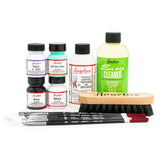
Angelus Brush Cleaner: Essential for removing acrylic buildup while conditioning bristles to maintain a precision "snap.
-
Angelus Microbrush Set: Ultra-fine applicators designed for pinpointing marker lines without over-painting the surrounding leather.
- Angelus Paint Brush Set: High-quality synthetic brushes that ensure a smooth, stroke-free finish for seamless blending and coverage.
Image from: @_pk_customs