- Fast Action: Acrylic paint turns into a plastic polymer quickly; clean brushes immediately to prevent permanent hardening.
- Correct Temperature: Always use lukewarm water; hot water can dissolve the adhesive in the ferrule.
- Proper Drying: Lay brushes flat to dry to prevent water from rotting the handle or loosening the bristles.
- Conditioning: Use a dedicated cleaner like Angelus Brush Cleaner to maintain fiber flexibility and "spring."
If you work with acrylic paint, whether you are customizing sneakers, restoring leather, or experimenting on canvas, knowing how to clean acrylic paint brushes the right way is the difference between a tool that lasts years and one that ends up in the trash after a single use.
At Angelus Direct, we know a high-quality paintbrush is an artist's most vital asset. When acrylic paint dries, it transforms into a flexible plastic polymer. While this is great for your shoes, it is catastrophic for your bristles. Proper maintenance ensures your strokes stay smooth, your details stay sharp, and your investment is protected.
Why Immediate Brush Care Matters
Acrylic paint is water-based and fast-drying. Unlike oil paints, which stay wet for days, acrylics harden in minutes. Once the paint "cures" inside the ferrule (the metal part holding the bristles), it pushes the hairs apart, ruining the brush's fine point or flat edge forever.
- Prevent Permanent Hardening: Dried acrylic paint is water-resistant. If it settles at the base of the bristles, it creates a "plug" that makes the brush stiff and unusable.
- Maintain Color Purity: Leftover pigment from previous projects can bleed into new colors, muddying your custom sneaker designs.
- Better Performance: Clean brushes provide better "spring" and more consistent paint flow.
Required Materials for Professional Brush Cleaning
To clean your brushes like a pro, skip the harsh hardware store solvents and use tools designed for delicate synthetic and natural fibers.
| Item | Purpose |
|---|---|
| Angelus Brush Cleaner | Breaks down acrylic polymers and conditions bristles. |
| Lukewarm Water | Rinses away loose pigment without melting glue. |
| Lint-Free Cloth | Wipes away excess paint and moisture. |
| Old Toothbrush | Safely scrubs the ferrule and handle. |
Step-by-Step Guide: How to Clean Acrylic Paint Brushes
1. Wipe Off Excess Paint Immediately
As soon as you finish a section, wipe the brush on a lint-free cloth or paper towel. Gently squeeze the bristles from the ferrule to the tip. This removes the bulk of the paint solids before they have a chance to migrate deep into the brush head.
2. Rinse with Lukewarm Water
Submerge the bristles in lukewarm water. Expert Tip: Never use boiling or very hot water. High heat can melt the adhesive inside the ferrule, causing your brush to "shed" bristles onto your masterpiece. Swirl the brush gently against the bottom of your water jar to loosen the pigment.
3. Deep Clean with Angelus Brush Cleaner
To ensure every microscopic bit of acrylic is gone, use Angelus Brush Cleaner.
- Pour a small amount of cleaner into a shallow dish.
- Dip the bristles (do not submerge the handle) and massage the solution into the fibers with your fingers.
- The conditioning agents in the cleaner will restore the natural oils to the fibers, keeping them soft and flexible.
4. Reshape and Air Dry
After a final rinse, use your fingers to pull the bristles back into their original shape: pointed, flat, or angled. Lay the brushes flat on a towel to dry.
Important: Do not store brushes upright while wet. Gravity will pull water and paint residue down into the ferrule, leading to wood rot in the handle and loose bristles.
Frequently Asked Questions
How soon should I clean my brushes after painting?
To protect your tools, you should clean your brushes immediately. Because acrylic is fast-drying, it begins to harden the moment it is exposed to air. For best results, keep a rinse jar nearby and never let paint sit on the bristles for more than a few minutes.
How can I make my brushes last longer?
Longevity is all about Conditioning and Storage. Always use a dedicated cleaner like Angelus Brush Cleaner, which contains oils to keep fibers supple. Additionally, always dry your brushes flat; storing them upright while wet allows water to rot the wooden handle and loosen the ferrule.
Can I use the same cleaning method for natural and synthetic brushes?
Yes, though natural brushes require more care. Synthetic brushes are durable against the plastic nature of acrylics, but natural fibers (like Sable) can become brittle. Using a cleaner with conditioning agents is vital for natural hair to prevent the bristles from snapping over time.
Why do my brushes still feel stiff after cleaning?
Stiffness is caused by dried paint residue trapped at the base of the bristles. If your brush is stiff, soak the bristles in Angelus Brush Cleaner for 5 minutes, then use an old toothbrush to gently scrub the area where the bristles meet the metal ferrule to break up the "plug" of dried paint.
Required Materials: Shop the Look
Ensure your next project is professional-grade with these essential supplies:
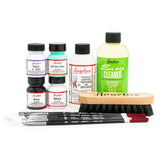
- Angelus Brush Cleaner: The gold standard for acrylic tool maintenance.
- Angelus Paint Brush Set: High-quality synthetic brushes designed for leather paint.
- Micro Detail Brush Set: For the finest lines and precision accents.
Image from: @_pk_customs