- The Golden Rule: Always clean before you condition. Applying conditioner over dirt traps grime inside the leather pores.
- Saddle Soap’s Role: Acts as an astringent to lift deep-seated dirt, salt, and old wax.
- Conditioner’s Role: Replaces lost natural oils to keep fibers flexible and prevent permanent cracking.
- The Finishing Touch: Always air dry at room temperature; artificial heat sources will make leather brittle.
When you are maintaining high-quality leather, knowing the difference between cleaning and conditioning is the key to a long-lasting finish. Whether you’re restoring vintage boots or prepping a custom sneaker project, using the wrong product at the wrong time can lead to buildup or even permanent cracking.
At Angelus Direct, we believe in using the right tool for the job. While both saddle soap and leather conditioner are essential, they serve completely different purposes. Understanding how these products interact ensures your leather stays supple, breathable, and protected.
Why the Difference Matters
Think of leather care like skincare: you wouldn't apply lotion to a face covered in dirt, and you wouldn't wash your face without moisturizing afterward. Leather is no different.
- Saddle Soap is for Cleaning: It is an astringent designed to lift dirt, grime, and old wax out of the pores of the leather.
- Leather Conditioner is for Nourishment: It replaces the natural oils that leather loses over time, keeping the fibers flexible so they don't snap (crack) when they bend.
- The Sequence: Using conditioner over dirty leather traps grime inside; using saddle soap without following up with conditioner leaves the leather dry and vulnerable.
Required Materials for Professional Leather Care
To get a professional-grade finish, you need products that balance cleaning power with deep hydration.
| Item | Purpose |
|---|---|
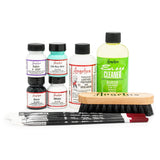
| Angelus Leather & Saddle Soap | Lifts heavy stains and salt while restoring essential surface oils. |
| Angelus Leather Conditioner | Deeply penetrates fibers to prevent cracking and maintain softness. |
| Horsehair Applicator Brush | Gently lathers soap into the grain without scratching the surface. |
| Microfiber Towel | Wipes away excess residue for a clean, matte finish. |
Step-by-Step Guide: Cleaning vs. Conditioning
1. The Deep Clean (Saddle Soap)
Apply a small amount of water to your brush or sponge and rub it into the Angelus Saddle Soap until a rich lather forms. Apply to the leather in circular motions. The soap will lift deep-seated dirt and salt. Wipe away the lather with a clean, damp cloth before it dries.
2. The Drying Phase
Never apply conditioner to wet leather. After using saddle soap, let the item air dry naturally at room temperature. Avoid using heaters or hair dryers, as extreme heat causes leather to shrink and become brittle.
3. The Restoration (Conditioner)
Once the leather is clean and dry, apply Angelus Leather Conditioner with a clean cloth. Massage it into the leather evenly. You will notice the leather "drinking" the conditioner as the fibers absorb the moisture.
4. Buff to Finish
Wait a few minutes for the conditioner to settle, then take a dry microfiber cloth and buff the surface. This removes any excess product and leaves a healthy, natural glow without a greasy residue.
Frequently Asked Questions: Saddle Soap Secrets
How soon should I clean my leather with saddle soap?
Clean your leather as soon as you see visible dirt, salt stains, or a "filmy" buildup of old wax. For daily-wear boots and sneakers, a deep clean every 3 to 6 months is the standard.
Pro Tip: If you are planning to paint or re-dye your leather, you must use saddle soap first to remove factory finishes and oils so the paint bonds correctly.
How can I make my leather last longer?
Longevity comes down to a simple two-step cycle:
Step 1: Use saddle soap to lift away the grit and salt that act like sandpaper on leather fibers.
Step 2: Always follow up with Angelus Leather Conditioner to put moisture back in, preventing the leather from drying out and cracking at the creases.
Can I use the same cleaning method for natural and synthetic brushes?
The technique is the same, but the tool matters. Natural Horsehair Brushes are the gold standard for saddle soap, as they create a richer lather and won't scratch premium leather. Synthetic Brushes are often too stiff and can leave micro-scratches on high-end sneaker leather.
Why does my leather still feel stiff after cleaning?
If your leather feels stiff after using saddle soap, it means the soap successfully deep-cleaned the pores and removed old oils. This makes the leather temporarily "thirsty." As soon as you apply Angelus Leather Conditioner, the fibers will relax and the leather will become softer and more flexible than ever.
Required Materials: Shop the Look
Equip your workshop with the essentials for heritage-grade leather maintenance:
- Angelus Leather & Saddle Soap: The pro's choice for prepping and cleaning smooth leather.
- Angelus Leather Conditioner: Professional-grade hydration for shoes, bags, and tack.
- Lustre Cream: For those who want a high-shine finish alongside their conditioning routine.