To dye a guitar, sand the body down to bare wood, raise the grain with a damp cloth and sand it smooth again, then wipe on Angelus Wood Dye in thin layers and seal it with a clear guitar finish once it's fully dry. Angelus dye soaks into the wood instead of covering it, so the grain shows through. That's why guitar builders use it for sunbursts, bright fades, and flamed maple tops that look like they glow.
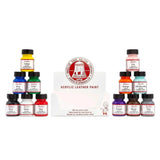
Angelus has made dyes in Los Angeles since 1907. They were made for leather, but luthiers and DIY builders found out years ago how well they work on wood, and guitars are now one of their favorite uses. If you're building your first body, the 12 Color Leather Dye Assortment Kit lets you test and blend before you commit.
Start here: what are you working with?
Quick answer: how to dye a guitar
- Sand the body to bare wood, finishing with fine grit.
- Wipe with a damp cloth, let dry, and sand lightly again.
- Test your dye on scrap or a hidden cavity.
- Wipe on Angelus Wood Dye in thin, even layers along the grain.
- Let it dry fully, then seal with a clear guitar finish.
Why builders dye instead of paint
Dye colors the wood. Paint covers it.
Think of tinted glass versus a painted window. Paint is a solid layer, so it hides the wood completely. Dye soaks into the fibers and tints them, so every ring, stripe, and flame in the grain still shows, just in a new color. That's the look on most high-end guitars, and it's why dyed bodies seem to change as you move them in the light.
The wood changes the color
Dye mixes with the wood's own tone. Pale maple shows colors true, while darker woods pull every color deeper.
It needs bare wood
Dye can't soak through an existing clear coat. If the guitar is already finished, that finish has to come off first.
Layers build depth
Several thin coats look richer than one heavy one, and they're easier to keep even.

The product behind this guide
Angelus Wood Dye
Deeply pigmented Angelus dyes that soak into bare wood and let the grain show through. Builders use them for sunbursts, bright fades, and flamed tops, and the colors blend easily for custom bursts.
4.8 stars from 2,000+ reviews of Angelus Leather Dye · From $5.95
Shop Wood Dye
Best way to start
12 Color Leather Dye Assortment Kit
A full set of colors in one box, so you can test on scrap, build a burst, and find your favorite shades before buying full bottles.
A favorite of first-time guitar builders · $51.95
Shop the 12 color kitShop this guide
Clean edges
Masking Tape
Masks the neck pocket, binding, and anywhere you want to stay natural.
ShopReal reviews from Angelus customers
Builders love it: 190+ five-star reviews mention guitars
★★★★★
"I am a guitar builder (Luthier) and have been looking for another way to give color and life to my instruments... The results have been nothing short of spectacular."
Douglas S. · Verified buyer · 12 Color Dye Kit
★★★★★
"I used These leather dyes to stain a sunburst (fade from yellow in the middle to black on the edge) on a guitar I was Building... The colors faded together easy and looks great!"
Sam W. · Verified buyer · Wood Dye
★★★★★
"I build guitars and decided to give Angelus dyes a shot. The dye worked so well for this guitar build I have decided to go with them exclusively."
Verified buyer · Wood Dye
If your guitar already has a finish
Factory guitars are sealed under a thick clear coat, and dye can't get through it. You'll need to remove the hardware and neck, then sand the finish off completely until you reach raw wood everywhere you want color. It's the most time-consuming part of the project, so many first-timers start with an unfinished body instead. Wear a dust mask while you sand.
How to dye a guitar body, step by step
Sand to smooth, bare wood
Work through progressively finer sandpaper, moving with the grain, and finish with fine Angelus Wet Sandpaper. Any scratch you leave will soak up extra dye and show as a dark line, so take your time here. Wipe off all the dust with a lint-free cloth.
Watch your sander: swirl marks from an orbital sander are invisible on raw wood and very visible under dye. Finish the last pass by hand, along the grain.
Raise the grain, then sand again
Wipe the body with a damp cloth and let it dry. The water lifts loose wood fibers that would otherwise stand up when the dye goes on and make the surface feel fuzzy. Give it one light pass with fine sandpaper, then remove the dust.
Test on scrap first
Try your colors on a scrap of the same wood, or inside a cavity that will be covered. Dye looks different on every species and darkens as you add layers, so this is where you dial in the shade.
Customer story
"This is my first attempt so I bought scrap wood to test different dyes and mixtures and seems all of my attempts were successful." (Scott T., verified buyer, Wood Dye)
Wipe on thin, even layers
With gloves on, apply Angelus Wood Dye with a lint-free cloth or the dauber, working along the grain in long strokes and keeping a wet edge so you don't get overlap lines. Let each layer dry before adding the next. Two or three thin layers give a deeper, more even color than one heavy coat.
Seal it with a clear guitar finish
Let the dye dry completely, ideally overnight. Then seal the body with a clear finish made for wood, like guitar lacquer, polyurethane, or a wipe-on oil finish. Mist or wipe the first coat on lightly so it doesn't drag the dye around, then build up coats as the finish's directions say. The clear coat protects the color and brings out the depth in the grain.
You can stop here
That's a dyed guitar body. Ready for more? The next two techniques are what make custom guitars stand out.
Next level: popping a flame or quilted maple top
Figured maple has stripes of soft and hard grain. The classic way to make that figure jump out uses two colors and a little sanding:
Apply a dark base color
Wipe on black or a very dark dye across the whole top and let it dry. The soft grain soaks up much more than the hard grain.
Sand it back
Lightly sand the top until most of the dark color comes off the surface. The dye stays down in the soft grain, so the flame now stands out in dark stripes.
Add your main color
Wipe your bright color over the top. It tints the lighter areas and sits over the dark figure, which gives that deep, three-dimensional flame.
Customer tip
"Application of this deeply pigmented dye with figured wood must be done with care, apply too much too soon and you will see the green push back... I got absolutely stunning results on my guitar body on 5A flame maple." (William W., verified buyer, Purple Dye)
Making a sunburst or color fade
A sunburst starts light in the center and fades darker toward the edges. Dye the whole top with your lightest color first, like yellow. Then work a medium color, like orange or red, in from the edges while the inner color is still fresh, and finish with a dark color, like brown or black, around the very outside. Blend where the colors meet with a damp cloth so the fade has no hard lines.
How different woods take dye
| Wood | What to expect |
|---|---|
| Maple | Pale and dense, so colors show bright and true. The favorite for vivid colors and flamed tops. |
| Ash | Strong, open grain that drinks up dye, so the grain pattern stands out boldly. |
| Alder | Even and easy to dye, with a softer grain pattern. |
| Mahogany and walnut | Naturally dark, so they pull colors deeper. Best for rich, dark tones. |
| Basswood | Soft and prone to blotching. Raise the grain carefully and test first. |
When to use something else
| If you want | What we'd use |
|---|---|
| Solid colors, graphics, or characters | Angelus Paint. See how to paint a guitar. |
| A custom guitar case | See how to paint a guitar case. |
| A matching leather strap | Use Angelus Leather Dye. See how to dye leather accessories. |
Mistakes that ruin a dyed guitar
- Dyeing over the old finish. Dye can't soak through a clear coat. Strip to bare wood first.
- Skipping the grain-raising step. The surface goes fuzzy when the dye hits it.
- Leaving sanding scratches or swirl marks. They soak up extra dye and show as dark lines.
- Flooding figured maple with dye. Build color in thin layers so you stay in control.
- Sealing too soon. Wet dye can smear into the first clear coat. Let it dry overnight.
- Skipping the scrap test. Every wood takes dye differently.
Guitars made with Angelus dyes
Some of our favorite builders use Angelus dyes on their instruments. Sponsored artist Tommy Nickerson (@beargallery) dyed an underwater background on an acoustic guitar, then painted the scene on top with Angelus Paint. Jay Hale (@jhaleguitarsusa) uses bright dyes for bold fades on his handmade guitars and basses. BigDGuitars (@bigdguitars), with over 20 years of building behind him, uses Angelus dyes for everything from dark stains to bright bursts.
Related guides: Paint a guitar · Paint a guitar case · Dye leather accessories · Mix custom colors
Dyeing guitars FAQ
Can you use leather dye on wood?
Yes. Angelus dyes soak into bare wood the same way they soak into leather, and guitar builders use them widely. Shop them in our Angelus Wood Dye collection.
How do you dye a guitar body?
Sand it to bare, smooth wood, raise the grain with a damp cloth and sand again, wipe on thin layers of dye along the grain, let it dry overnight, and seal it with a clear guitar finish.
Do you have to sand a guitar before dyeing it?
Yes. Dye needs bare wood to soak into, and any factory finish has to come off. Smooth sanding also keeps the color even.
How do you make the flame pop on maple?
Dye the top black, sand it back so the dark color stays only in the soft grain, then apply your main color over it.
What finish goes over a dyed guitar?
A clear finish made for wood, like guitar lacquer, polyurethane, or a wipe-on oil finish. Apply the first coat lightly so it doesn't move the dye.
Can you dye a guitar without removing the finish?
No. Dye can't soak through a clear coat. To change color without stripping, you'd need paint instead.
What is the difference between wood dye and wood stain?
Dye is made of fine particles that soak deep into the wood for bright, clear color. Many stains carry heavier pigment that sits more in the grain and looks muddier on figured wood. That's why builders prefer dye for vivid guitar colors.