- Strip Finish: Use Angelus Leather Preparer and Deglazer to remove factory coatings or the fade will peel.
- Thin Layers: Build color slowly to prevent a "cakey" texture and ensure flexibility.
- Blending Technique: Use a damp sponge or airbrush at the midpoint to soften color transitions.
- Seal Art: Apply 4-Coat Finisher to protect delicate gradients from moisture and scuffs.
Customizing high-tops with a gradient finish is one of the most effective ways to turn standard sneakers into rocking a high-end vibe. A smooth color transition, or "fade", gives your footwear a dynamic, contemporary look that is difficult to achieve with stock colorways.
Whether you're aiming for a subtle "Sunset" glow or a bold "Cyberpunk" transition, We got you.

🎨 The Playbook: Achieving Flawless Color Blending
1. Prep the Surface
Before painting, it is helpful to ensure your high-tops are free of dust and debris.
- For Canvas: A light cleaning is usually sufficient to remove surface dirt. You want a clean, dry surface so the paint can soak in evenly.
- For Leather: If you are working on a leather pair, using Angelus Leather Preparer & Deglazer to remove the factory silicone coating is a common practice so the paint can bond to the hide.
2. Map Your Colors
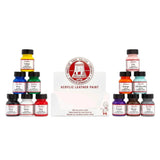
Choose 2-3 colors that transition naturally (e.g., Light Blue to Dark Navy). Visualize where the "midpoint" of the fade will be, usually the mid-panel of the high-top, to ensure a balanced look on both shoes.
3. Apply the Base
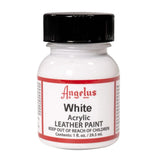
Start with a light-colored base coat (typically White). This creates a neutral foundation that makes your gradient colors look significantly more vibrant and requires fewer layers for full coverage.
4. Blend the Transition
For the best results, use a damp sponge or an airbrush. Apply your first color at one end and the second color at the other. At the midpoint, lightly "stipple" or spray the colors so they overlap. Building color through thin, multiple layers is required to avoid a brittle, "cakey" texture.
5. Lock in the Fade
Once the paint is fully dry, apply 2-3 coats of Angelus 4-Coat Finisher. This protective barrier helps the delicate blending withstand daily wear, moisture, and ultraviolet fading.
🔎 Frequently Asked Questions
How long does it take for the gradient to dry?
While each thin layer dries in about 15-30 minutes, it is highly recommended to let the shoes cure for 24-48 hours before wearing. This allows the paint to fully cross-link with the leather fibers.
Can I do a gradient on canvas high-tops?
Yep! For canvas or fabric, simply mix your Angelus Paint 50/50 with Angelus 2-Soft. This allows the paint to soak into the fabric rather than sitting on top, maintaining a soft feel. However, it is a completely optional step.
What if my transition looks "choppy"?
If the fade isn't smooth, you can lightly apply a "middle" shade (a custom mix of your two main colors) at the transition point. Using a sponge to dapple the paint often helps soften hard lines and creates a more natural blend.
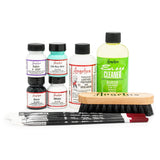
Required Materials: Shop the Look
| Essential Supply | Purpose |
|---|---|
| Angelus Preparer & Deglazer | Removes factory seal to ensure the gradient bonds permanently. |
| Angelus Acrylic Paint | High-vibrancy, flexible pigment for perfect color transitions. |
| Angelus Acrylic Finisher | The ultimate scratch-resistant sealer for custom artwork. |
Pictures by: @deacsdesigns