To clean ink off leather, blot the stain immediately with a clean absorbent cloth, identify the leather type, and patch-test the cleaning product in a hidden area before treatment. Apply a leather-safe ink remover to a cloth, gently dab the affected spot, wipe away lifted ink, repeat the process only when needed, and condition the leather after cleaning. These steps help control ink transfer while reducing the risk of spreading the stain or affecting the leather finish, dye, color, and texture.
After completing these cleaning steps, choose the treatment approach based on the leather condition and the type of ink stain. Use a suitable cleaning method based on the leather type, ink condition, and how the surface responds. Use a soft white cloth, compatible leather-safe cleaner, cotton swabs or pads, clean water, and leather conditioner to support controlled treatment. Allow the leather to air-dry between attempts, inspect for fading, darkening, tackiness, or discoloration, and stop treatment if the surface shows signs of damage. Avoid rubbing, excessive moisture, harsh solvents, and strong heat, as they can affect the leather surface during ink removal.
Follow the steps given below to clean the ink off leather:
-
Blot the ink stain immediately
Act immediately by blotting the stain with a clean, dry, absorbent cloth to lift as much of the ink as possible. Place the cloth directly over the affected area and press lightly without rubbing. Gentle pressure draws liquid ink into the cloth while reducing the risk of it spreading onto the surrounding leather.
Work from the outside of the stain toward the center, using a clean section of the cloth after each blot. Continue until the cloth no longer picks up noticeable ink. Avoid scrubbing, dragging, or pressing forcefully because these actions can push ink deeper into the leather. If the ink has dried, skip aggressive scraping and move to a leather-appropriate cleaning method instead.
-
Identify your leather type before cleaning
Before choosing a cleaning method, determine whether the material is finished leather, aniline leather, suede, nubuck, or another type of leather. Different surfaces absorb liquids and react to cleaners differently, so a product suitable for finished leather may discolor or damage porous leather. Check the manufacturer's care label or original product instructions when available.
Pay particular attention to the surface finish and texture before applying any liquid. Smooth, coated leather can tolerate different cleaning approaches than absorbent suede or nubuck. Never assume that every leather cleaner works across all leather types. If the material remains uncertain, choose the gentlest appropriate method and avoid harsh solvents. Correct identification helps you select a suitable remover while reducing unnecessary changes to color, texture, or finish.
-
Patch test the product in a hidden area
Test the leather cleaner or ink remover on a small, concealed area before treating the visible stain. Choose an inconspicuous location, such as the underside, the interior edge, or the area beneath a flap. Apply the product according to the instructions, and use the same cloth and amount you plan to use on the actual stain.
Allow the test area to dry fully before evaluating it. Watch for discoloration, dye transfer, darkening, lightening, stiffness, peeling, stickiness, or changes in texture. If any unwanted reaction appears, stop using that product. A leather-safe label does not mean the formula is suitable for every finish or dye. Testing first lets you identify compatibility issues in a hidden area and reduces the risk of leaving a larger, visible mark during ink removal.
-
Apply leather-safe ink remover to a cloth
Apply a small amount of leather-safe ink remover to a clean, soft, lint-free cloth instead of pouring it directly onto the stained leather. Using the cloth gives you greater control over the amount of product and keeps the treatment focused on the affected area. Follow the product directions for application, quantity, and contact time.
Avoid saturating the leather because excess moisture can spread the ink or penetrate porous surfaces. Do not substitute acetone, bleach, abrasive cleaners, or strong household solvents unless the leather manufacturer specifically approves them. Begin with a small amount of the recommended remover, and increase gradually only when the instructions allow. A controlled application limits unnecessary contact between the cleaner and unstained leather while allowing the remover to loosen the ink without excessive wetting.
-
Dab or wipe the stain in gentle motions
Work the remover into the ink mark with light dabbing motions to gradually lift the pigment without spreading it. Begin at the outer edge and move toward the center, lifting the cloth between applications instead of dragging it across the leather. If the product permits wiping, use short, controlled strokes with minimal pressure.
Watch the cloth as you work because transferred ink indicates that the remover is lifting the stain. Replace or rotate the cloth section as it becomes soiled. Avoid vigorous scrubbing, which can affect the leather's finish and potentially spread the mark. Stop if the leather's original dye begins transferring to the cloth, as continued treatment may remove the leather's color along with the ink. Several gentle passes are preferable to one forceful application.
-
Wipe away lifted ink with a clean cloth
Remove loosened ink and remaining cleaner with a separate clean, soft cloth after treating the stain. Gently blot or wipe the area according to the remover's instructions, using a fresh section of the cloth as ink transfers. Do not reuse the application cloth if it contains visible ink because it can redeposit pigment onto the leather.
Continue until visible residue has been removed without excessively wetting the surface. If the cleaner requires a damp cloth for removal, use only the amount of moisture specified by the manufacturer. Afterward, allow the leather to dry naturally in a well-ventilated area. Keep it away from direct sunlight, radiators, hair dryers, and other concentrated heat sources. Uneven or rapid drying can affect leather's texture, flexibility, and appearance, particularly after localized cleaning.
-
Repeat the process if ink remains
Let the treated area dry completely before deciding whether another application is needed. Examine the stain under good lighting to see how much ink remains, then repeat the treatment only if the remover's instructions permit additional applications. Use a fresh, clean cloth and a small amount of product for each pass.
Avoid increasing pressure or applying excessive remover when the first treatment leaves some ink behind. Gradual applications reduce unnecessary stress on the leather compared with aggressive scrubbing. Stop immediately if the leather begins changing color, texture, or finish. Deeply absorbed or older ink may not disappear completely, particularly from porous leather. Continuing home treatment after the surface begins reacting can cause more noticeable damage than the original stain. Persistent marks may require professional leather cleaning.
-
Condition the leather to restore moisture
Apply a leather conditioner compatible with the material after the cleaned area has dried completely. Conditioning can help replenish some surface moisture and maintain a supple feel after cleaning. Choose a product intended for the specific leather type, and follow its application instructions rather than applying a heavy layer.
Place a small amount of conditioner on a clean cloth and spread it evenly over the affected area or the recommended section of the item. Avoid oversaturating the leather, as excess conditioner can leave residue or darken certain finishes. Do not use smooth-leather conditioners on suede or nubuck unless the manufacturer specifically recommends them. Allow the conditioner to fully absorb, then buff away any excess product if directed. Finally, inspect the treated area for remaining ink, uneven color, or texture changes before returning the item to regular use.
What Do You Need to Remove Ink From Leather?
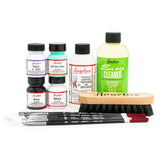
To remove ink from leather, you need a soft white cloth, leather-safe cleaner, cotton swabs or pads, clean water, and leather conditioner. These supplies help control ink transfer, apply cleaning products precisely, remove residue, and maintain the leather surface after treatment. Use compatible materials and controlled amounts to protect the finish, color, and texture during ink removal.
5 supplies you need to remove ink from leather include:
-
Soft white cloth
A soft white cloth helps blot ink, apply cleaner, and remove transferred pigment from the leather surface during treatment. Select a clean, absorbent cloth that does not add color or residue to the material. Move to a fresh section of the cloth as ink transfers to prevent returning pigment to the leather. The cloth also helps control pressure and moisture while cleaning the affected area.
-
Leather-safe cleaner
A leather-safe cleaner is formulated to treat ink stains while limiting changes to the leather finish, dye, color, and texture. Choose a cleaner compatible with your leather type, and test it in a hidden area before applying it to a visible area. Apply a small amount to a cloth, cotton pad, or cotton swab, then treat the stain with controlled pressure to lift the ink without adding excess moisture.
-
Cotton swabs or pads
Cotton swabs or pads provide precise application when treating small ink marks and localized stains on leather. These tools help apply a controlled amount of cleaner directly to the affected spot without spreading the product across surrounding areas. Dab the stain gently as ink begins to lift, and replace the applicator when it collects transferred pigment or residue.
-
Clean water
Clean water supports mild cleaning methods by helping prepare soap solutions, dampen cloths, and remove remaining residue after treatment. Keep the cloth slightly damp rather than wet to limit moisture exposure on the leather surface. Controlled water use helps prevent excess moisture from spreading while allowing the treated area to dry naturally after cleaning.
-
Leather conditioner
A leather conditioner helps maintain moisture, softness, and flexibility after proper ink-removal treatment. Apply a compatible conditioner after the leather surface has dried and follow the product instructions for proper application. Test the conditioner on a hidden area before wider use to check compatibility. Proper conditioning helps preserve the leather finish and support long-term surface care.
What Should You Test Before Cleaning Ink From Leather?
Before cleaning ink from leather, test the cleaning solution on a hidden or inconspicuous area to check how the surface reacts. Apply a small amount of the product, wait for the reaction to take effect, and inspect the leather before treating the visible ink stain. This test helps identify possible changes to the leather finish, dye, color, texture, or absorption level.
Check the following areas during the test:
-
Colorfastness: Check whether the cleaner or alcohol removes, fades, or changes the leather’s original dye or color.
-
Surface damage: Inspect whether the product affects the protective finish, changes the texture, or alters the surface appearance.
-
Absorption: Observe whether the liquid is absorbed quickly by the leather, which may indicate a more absorbent leather type that requires extra care.
How Do You Remove Fresh and Dried Ink Stains From Leather?
Remove fresh ink stains from leather by blotting the wet ink quickly with a clean, absorbent cloth, then applying a small amount of compatible leather-safe cleaner to lift the remaining pigment. Treat dried ink stains gradually with short applications of cleaner, allowing the leather to air-dry and checking the finish between attempts. The main difference is that fresh ink requires immediate blotting to contain transfer, while dried ink requires repeated, controlled treatment to loosen the set stain.
Remove Fresh Ink Stains From Leather
Remove fresh ink stains from leather by blotting the wet ink immediately with a clean, absorbent white cloth, testing a compatible leather-safe cleaner in a hidden area, and applying a small amount of cleaner to the affected spot. Quick treatment helps lift excess pigment while limiting ink transfer, moisture spread, and changes to the leather finish, dye, color, and texture.
Follow these steps to remove fresh ink stains from leather:
-
Blot the wet ink with a clean, absorbent white cloth without rubbing the surface to lift excess pigment and prevent the stain from spreading.
-
Move to a clean section of the cloth as ink transfers from the leather to avoid placing lifted pigment back onto the surface.
-
Patch-test a compatible leather-safe cleaner in a hidden area and inspect the finish, dye, color, and texture before visible treatment.
-
Apply a small amount of cleaner to a cloth or cotton swab and gently dab the affected spot while keeping moisture limited.
-
Wipe away remaining cleaner residue with a compatible damp cloth, allow the leather to air-dry, and inspect the surface before repeating treatment.
Remove Dried Ink Stains From Leather
Remove dried ink stains from leather by testing a compatible leather-safe cleaner on a hidden area, applying a small amount to the stain, and gently dabbing the surface with controlled pressure. Since dried ink has set on the leather, treat the mark gradually and inspect the finish, color, and texture between applications to reduce the risk of affecting the surface.
Follow these steps to remove dried ink stains from leather:
-
Patch-test a compatible leather-safe cleaner on a hidden area and check the finish, color, and texture before visible treatment.
-
Apply a small amount of cleaner to a clean cloth or cotton swab and gently dab the dried ink mark to loosen the stain.
-
Move to a clean section of the cloth as pigment transfers from the leather to prevent lifted ink from returning.
-
Allow the treated area to air-dry between applications and inspect the surface before repeating the process.
-
Continue treatment only while the ink lifts and the leather finish remains stable.
-
Stop cleaning if the leather becomes faded, darkened, tacky, or discolored.
How Do You Remove Different Types of Ink From Leather?
To remove different types of ink from leather, use an ink-specific approach based on whether the stain comes from a ballpoint pen, gel pen, fountain pen, permanent marker, printer ink, or stamp ink. Each ink type requires controlled treatment with a compatible leather-safe cleaner, limited moisture, and gentle blotting to lift pigment without spreading the stain. Patch-test the cleaner in a hidden area, treat the affected spot gradually, remove residue, and let the leather air-dry between attempts. Apply a suitable leather conditioner to help clean the affected leather while preserving moisture and keeping the surface soft and supple.
How Do You Remove Ballpoint Pen Ink From Leather?
To remove ballpoint pen ink from leather, blot fresh ink with a clean cloth, test a compatible leather-safe cleaner in a hidden area, treat the mark with a controlled amount of cleaner, wipe away residue, and let the leather air-dry. Controlled treatment helps lift ballpoint ink while limiting pigment spread, excess moisture, and changes to the leather finish, dye, color, or texture.
Use the following steps to remove ballpoint pen ink from leather:
-
Blot fresh ballpoint ink with a clean, absorbent white cloth, without rubbing or spreading it across the leather surface.
-
Patch-test a compatible leather-safe cleaner in a hidden area, then inspect the finish, dye, color, and texture before treatment.
-
Apply a small amount of cleaner to a cotton swab or cloth, then gently dab the ballpoint pen mark until the ink begins to lift.
-
Wipe away any remaining cleaner residue, let the leather air-dry naturally, and repeat the treatment only as long as the finish remains stable.
How Do You Remove Gel Pen Ink From Leather?
To remove gel pen ink from leather, blot fresh ink with a clean, absorbent cloth, test a compatible leather-safe cleaner in a hidden area, treat the affected spot with a controlled amount of cleaner, wipe away residue, and let the leather air-dry. Gel ink can transfer across the leather surface during cleaning, so limited moisture and gentle pressure help contain the stain while protecting the finish, dye, color, and texture.
Use the following steps to remove gel pen ink from leather:
-
Blot fresh gel ink with a clean, absorbent white cloth to lift excess ink without rubbing or spreading the stain.
-
Patch-test a compatible leather-safe cleaner on a hidden area before applying it to the visible gel pen mark.
-
Dab a small amount of cleaner onto the affected spot with a cotton swab or clean cloth, using gentle, controlled pressure.
-
Wipe away any remaining residue, let the leather air-dry naturally, and repeat the treatment only while the finish remains stable.
How Do You Remove Fountain Pen Ink From Leather?
To remove fountain pen ink from leather, blot the fresh ink with a clean absorbent cloth, test a compatible leather-safe cleaner on a hidden area, and treat the affected surface with a controlled amount of cleaner. Remove any remaining residue, let the leather air-dry, and inspect the finish before repeating the treatment. Quick blotting helps contain wet fountain pen ink while limiting pigment transfer, excess moisture, and changes to the leather finish, dye, color, or texture.
Remove fountain pen ink from leather with the following steps:
-
Blot fresh fountain pen ink with a clean, absorbent white cloth to lift excess ink without rubbing or spreading the stain.
-
After patch testing, apply a compatible leather-safe cleaner and treat the affected spot with a cotton swab or clean cloth using gentle pressure.
-
Wipe away any remaining cleaner residue, let the leather air-dry naturally, and repeat treatment only while the finish remains stable.
How Do You Remove Permanent Marker Ink From Leather?
To remove permanent marker ink from leather, test a compatible leather-safe cleaner in a hidden area, apply a controlled amount to the stain, gently lift the ink, remove cleaner residue, and let the leather air-dry completely. Careful treatment helps limit changes to the leather finish, dye, color, and texture while preventing the marker ink from spreading across the surrounding surface.
Clean permanent marker ink from leather with these steps:
-
Select a leather-safe cleaner, patch-test it on a hidden area, and inspect the finish and color before treating the visible marker stain.
-
Apply a small amount of cleaner with a cotton swab or clean white cloth and dab the affected spot using gentle, controlled pressure.
-
Move to a clean section of the cloth as the marker ink lifts, and avoid soaking or scrubbing the leather surface.
-
Wipe away any remaining cleaner residue, let the leather air-dry, and repeat treatment only while the finish remains stable.
How Do You Remove Printer Ink From Leather?
To remove printer ink from leather, blot fresh ink with a clean, absorbent cloth, test a leather-safe cleaner on a hidden area, apply a controlled amount of cleaner to the affected surface, remove any residue, and allow the leather to air-dry. Careful treatment helps contain ink transfer and limit moisture while protecting the leather finish, dye, color, and texture during cleaning.
Follow the steps below to clean the printer ink from leather:
-
Blot fresh printer ink with a clean, absorbent white cloth to lift excess ink without rubbing or spreading it across the leather surface.
-
Select a leather-safe cleaner, patch-test it on a hidden area, and inspect the finish and color before treating the visible stain.
-
Apply a small amount of cleaner with a cotton swab or clean cloth and gently dab the affected area as the ink begins to lift.
-
Wipe away any remaining cleaner residue, let the leather air-dry naturally, and repeat treatment only while the finish remains stable.
How Do You Remove Stamp Ink From Leather?
To remove stamp ink from leather, blot fresh ink with a clean, absorbent cloth, test a leather-safe cleaner in an inconspicuous area, apply a small amount of cleaner to the affected spot, remove the residue, and let the leather air-dry. Controlled cleaning helps lift stamp ink while limiting pigment transfer, excess moisture, and changes to the leather finish, dye, color, or texture.
Clean stamp ink from leather with these steps:
-
Blot fresh stamp ink with a clean, absorbent white cloth to lift excess ink without rubbing or spreading the stain.
-
Select a leather-safe cleaner, patch-test it on a hidden area, and inspect the finish and color before treating the visible ink mark.
-
Apply a small amount of cleaner with a cotton swab or clean cloth and gently dab the affected area as the ink begins to lift.
-
Wipe away remaining cleaner residue, allow the leather to air-dry naturally, and repeat treatment only while the finish remains stable.
How Do You Remove Ink From Different Leather Items?
To remove ink from different leather items, adjust the cleaning process based on the item’s surface, finish, seams, and areas affected by the stain. Leather sofas, car seats, jackets, bags, and shoes require controlled amounts of compatible cleaner, gentle blotting, and limited moisture. Patch-test the cleaning product in a hidden area before treating the ink mark. A suitable leather conditioner that also cleans can help treat compatible leather while preserving moisture and keeping the surface soft and supple.
How Do You Remove Ink Marks From a Leather Sofa or Chair?
To remove ink marks from a leather sofa or chair, blot fresh ink with a clean, absorbent cloth, patch-test a leather-safe cleaner, and treat the stained upholstery with minimal moisture. Keep the cleaner within the affected area and use gentle pressure to prevent pigment from spreading across the seat or backrest. Clean residue from the surface and allow the treated upholstery to air-dry before repeating treatment.
Remove ink marks from a leather sofa or chair with these steps:
-
Blot fresh ink from the sofa or chair with a clean, absorbent white cloth without rubbing the stained upholstery.
-
Patch-test a compatible leather-safe cleaner in a hidden section before treating the visible ink mark.
-
Apply a small amount of cleaner to a cotton swab or cloth, then dab the affected seat, armrest, or backrest.
-
Wipe away remaining residue, let the surface air-dry, and repeat treatment only while the leather finish remains stable.
How Do You Remove Ink From Leather Car Seats?
To remove ink from leather car seats, blot any transferable ink, test a leather-safe cleaner in an inconspicuous area, and treat the affected seat panel with a controlled amount of product. Keep excess moisture away from seams and perforated areas while gently lifting the stain from the surface. Remove remaining cleaner residue and allow the seat to air-dry with natural airflow before inspecting the leather finish and color.
Remove ink from leather car seats with these steps:
-
Blot fresh ink with a clean, absorbent white cloth to contain pigment transfer across the seat surface.
-
Patch-test a compatible cleaner in a hidden section and inspect the leather finish and color before treatment.
-
Dab the ink mark with a small amount of cleaner while controlling moisture around seams and perforated sections.
-
Wipe away residue, allow the seat to air-dry with airflow, and repeat treatment only while the finish remains stable.
How Do You Remove Ink From a Leather Jacket?
To remove ink from a leather jacket, place the jacket on a clean surface, blot the fresh ink, and patch-test a leather-safe cleaner in a hidden area. Apply a small amount of cleaner to the affected area with a cotton swab or clean cloth, and gently lift the ink without soaking the leather. Treat seams and nearby sections carefully, then remove residue and allow the jacket to air-dry naturally.
Remove ink from a leather jacket with these steps:
-
Lay the jacket on a clean surface and blot fresh ink with an absorbent white cloth without rubbing the mark.
-
Check the care label and patch-test a compatible leather-safe cleaner in a hidden section of the jacket.
-
Dab a small amount of cleaner onto the affected panel with gentle, controlled pressure while limiting moisture.
-
Wipe away cleaner residue and allow the jacket to air-dry naturally before inspecting the finish, color, and texture.
How Do You Remove Ink From a Leather Bag?
To remove ink from a leather bag, empty the bag, blot the affected area with a clean cloth, and test a leather-safe cleaner in an inconspicuous area. Apply a small amount of cleaner directly to the ink mark while controlling moisture around seams, straps, and hardware. Gently lift the pigment with a clean cloth or cotton swab, remove any remaining residue, and let the bag air-dry while maintaining its shape.
Remove ink from a leather bag with these steps:
-
Empty the bag and blot the fresh ink with a clean, absorbent white cloth to avoid spreading the stain.
-
Patch-test a compatible leather-safe cleaner in a hidden area before treating the exterior leather.
-
Dab the affected panel with a small amount of cleaner while controlling moisture around seams, straps, and hardware.
-
Wipe away residue, maintain the bag’s shape while it dries, and repeat treatment only while the finish remains stable.
How Do You Remove Ink From Leather Shoes?
To remove ink from leather shoes, remove the laces if they interfere with the stained area, blot the fresh ink, and patch-test a leather-safe cleaner. Apply a small amount of cleaner to the ink mark with a cotton swab or clean cloth, keeping excess moisture away from seams and nearby areas. Lift the stain gradually, remove cleaner residue, and allow the shoes to air-dry naturally before inspecting the treated leather.
Remove ink from leather shoes with these steps:
-
Remove the laces when needed, and blot fresh ink with a clean, absorbent white cloth to avoid spreading the stain.
-
Patch-test a compatible leather-safe cleaner in a hidden section before treating the visible ink mark.
-
Apply a small amount of cleaner to a cotton swab or cloth, then gently dab the affected leather surface.
-
Wipe away residue, allow the shoes to air-dry naturally, and repeat treatment only while the finish remains stable.
What Are the Dos and Don’ts of Removing Ink From Leather?
Perform a patch test, use a small amount of leather-safe cleaner, blot the ink with a clean white cloth, apply gentle pressure, and allow the leather to air-dry between attempts while removing ink. Avoid soaking or scrubbing the leather, applying excess pressure, using bleach, acetone, or uncontrolled solvents, exposing the surface to strong heat, or continuing treatment once you see signs of finish damage. These practices help control ink transfer and moisture while protecting the leather finish, dye, color, and texture throughout the cleaning process.
Do's When Removing Ink From Leather
-
Blot the ink stain with a clean, absorbent cloth to lift the pigment and prevent ink transfer from spreading across the leather surface.
-
Apply a small amount of compatible cleaner to a cloth or cotton swab to target the ink while limiting moisture on the leather.
-
Dab only the affected area with gentle pressure to keep the treatment controlled and prevent the ink from spreading to the surrounding surface.
-
Move to a clean section of the white cloth as the ink transfers to prevent lifted pigment from contacting the treated leather again.
-
Allow the leather to air-dry between cleaning attempts and inspect the finish, dye, color, and texture before applying more cleaner.
Don'ts When Removing Ink From Leather
-
Test rubbing alcohol or other suitable solvents before use rather than applying them directly to the visible stain without checking a hidden area.
-
Do not soak the leather with excess water or cleaner, as moisture can spread beyond the affected area and expose more of the surface to the solution.
-
Keep bleach and acetone away from ink-stained leather because these products can affect the finish, dye, color, or texture.
-
Skip scrubbing or applying excess pressure to the ink stain because aggressive rubbing can damage the leather finish and spread the ink.
-
Do not use a dryer, radiator, or other strong heat source, and allow the treated leather to air-dry naturally.
-
Stop cleaning if the leather becomes faded, darkened, tacky, or discolored because repeated treatment can affect an already altered finish.
How Do You Restore Leather After Ink Removal?
To restore leather after ink removal, check the surface for dryness, apply a compatible leather conditioner, inspect for color loss or fading, restore the finish if needed, and allow the leather to recover before use. Complete each step after the surface has dried, use suitable care products in controlled amounts, and monitor the leather’s texture, flexibility, color, and finish throughout restoration.
The following steps help restore the leather after ink removal:
-
Check the leather for dryness
Once the cleaned surface has air-dried completely, inspect the leather for dryness. Gently compare the treated area with the surrounding leather for changes in texture, flexibility, or moisture. Pay particular attention to areas treated repeatedly with cleaner because the surface may feel dry after ink removal. If it feels dry, keep the leather clean and dry before moving to conditioning.
-
Apply leather conditioner
Apply a compatible leather conditioner to the clean, dry surface when the leather needs conditioning after ink removal. Test the conditioner on a hidden area, then apply a small, controlled amount according to the product instructions. Work it gently over the treated leather and avoid excess product. Allow the conditioner to absorb before inspecting the surface for changes in texture, flexibility, finish, or color.
-
Check for color loss or fading
Examine the treated leather for color loss or fading once the surface has dried and conditioning is complete, when suitable. Compare the cleaned spot with the surrounding leather under consistent lighting and inspect for faded, darkened, or discolored areas. Watch the edges of the treated spot, where changes may be visible. Stop further cleaning if the finish or dye shows a noticeable reaction.
-
Restore the finish if needed
Recondition the leather finish if ink removal leaves a visible change in the treated surface. Inspect the color, texture, and finish before applying a compatible leather conditioner that cleans, preserves, and conditions suitable leather. Test the product in a hidden area, apply a controlled amount as directed, and inspect the treated surface before applying more product.
-
Allow the leather to recover before use
Allow the leather to recover before regular use by leaving the cleaned and conditioned surface in a dry, ventilated area. Allow any remaining moisture or applied care product time to settle before applying pressure to the treated area. Keep the leather away from strong heat and direct sunlight during this period. Inspect the surface once more and resume use when the leather is dry and stable.
Can Ink Removal Damage Leather?
Yes, Ink removal can damage leather when the cleaner, solvent, moisture level, or rubbing pressure is unsuitable for the leather type. Strong solvents may remove pigment or affect the protective finish along with the ink, while excessive moisture can darken or stain porous leather. Aniline, suede, and nubuck are more sensitive than protected or pigmented leather and require more careful treatment. Testing any product in an inconspicuous area first can help identify an unwanted reaction before treating the visible stain.
How Do You Prevent Ink Stains on Leather?
To prevent ink stains on leather, keep uncapped pens, leaking cartridges, and markers away from leather surfaces. Store writing instruments in a separate pouch inside leather bags, and avoid placing pens directly on leather furniture or seats. Blot fresh ink promptly rather than rubbing it, regularly inspect pen compartments for leaks, and follow the leather manufacturer’s care recommendations to maintain the surface and finish.
When Should Ink-Stained Leather Be Professionally Cleaned?
Professional cleaning is appropriate when the ink stain affects aniline, suede, nubuck, antique, valuable, or already damaged leather. Seek specialist care when ink has penetrated deeply, covers a large area, or remains after careful treatment with a leather-safe cleaner or compatible spot remover. A professional can inspect sensitive leather for changes in color, texture, dye, or finish and determine whether further cleaning, color correction, or refinishing is suitable.