To clean mold off leather, remove loose mold, prepare a compatible cleaning solution, treat affected areas carefully, remove residue, dry the leather naturally, and restore its condition after cleaning. Start by moving the moldy leather item to a well-ventilated area, and wear gloves, an N95 mask or respirator, and eye protection before removing any visible growth. Use a soft brush or clean cloth to lift surface mold without spreading spores or damaging the leather. Select a leather-safe cleaner appropriate for the material type, and patch-test it before application. Apply the solution with controlled moisture, wipe away residue, and avoid soaking seams, linings, or padding.
After cleaning, allow the leather to dry completely away from direct heat, sunlight, and artificial heating sources. Inspect the surface for remaining mold, odor, stiffness, or discoloration before applying a compatible leather conditioner. Proper storage, airflow, and humidity control help prevent mold from returning. Regular inspections also help identify early signs of moisture buildup before new growth develops.
Follow the steps given below to clean the mold off leather:
-
Step 1: Brush away loose mold outside
Move the moldy leather item to a well-ventilated outdoor area or suitable workspace before disturbing visible mold growth. Wear protective equipment, including gloves, an N95 mask or respirator, and eye protection, because brushing can release loose mold spores into the air. Use a soft brush or a clean cloth to gently remove surface mold without aggressive scrubbing that could damage the leather or spread contamination.
Keep removed mold particles away from surrounding leather goods and nearby surfaces during cleaning. Avoid shaking the item because loose spores can spread into the surrounding environment. Brush seams, folds, edges, and other affected areas carefully while keeping the removed debris contained for safe disposal.
-
Step 2: Prepare the cleaning mixture
Select a cleaning solution that matches the leather type, finish, and manufacturer instructions before treating visible mold. Suitable options may include a pH-balanced leather cleaner, leather-specific cleaning products, or other approved solutions designed for finished leather. Some finished leather surfaces may tolerate diluted isopropyl alcohol when product guidance supports its use, while suede and nubuck require specialized products because standard wet cleaning can damage their texture.
Test the prepared cleaning solution on a small, hidden area before treating visible mold. Allow the patch test to dry completely, then inspect the leather for discoloration, darkening, dye transfer, or changes in the finish before proceeding.
-
Step 3: Treat the affected areas
Apply a small amount of the tested cleaning solution to a clean, soft cloth rather than pouring liquid directly onto the moldy leather. Dab or wipe the affected area with controlled pressure, working across small sections so you can monitor the leather surface closely. Treat the visible mold and its immediate edges without soaking seams, stitching, lining, padding, or other moisture-sensitive components. Keep the cloth damp, not saturated, during treatment.
Watch the leather for color transfer, darkening, staining, or changes to the finish as you clean mold. Stop applying the cleaner if the surface reacts unexpectedly. Use controlled applications rather than repeated heavy treatments on affected areas.
-
Step 4: Clean away the solution
Use a separate clean cloth to remove loosened mold residue and remaining cleaning solution from the treated leather surface. Keep the cloth only as damp as the specific leather allows, and wipe with controlled movements rather than saturating the area. Replace or reposition the cloth when it collects visible residue to prevent contaminated material from moving back across sections that have already been cleaned. Remove cleaner carefully from seams, folds, and surface edges.
Inspect the treated leather under suitable lighting for residual cleaner, mold particles, or uneven moisture. Wipe remaining residue carefully when necessary. Avoid repeated wetting because excess moisture can penetrate leather and create conditions that support another mold problem.
-
Step 5: Allow natural drying
Place the cleaned leather in a dry, ventilated room and allow remaining moisture to evaporate naturally. Maintain normal room conditions and sufficient airflow around the affected surface. Keep the leather away from direct sunlight, radiators, hair dryers, heaters, or other concentrated heat sources while it dries. Position structured leather items to retain their shape, and keep damp surfaces separate from surrounding materials during the drying period.
Wait until the leather is completely dry before assessing the cleaning result. Damp leather can appear darker and may temporarily feel different from surrounding areas. Inspect the dry surface for remaining mold, discoloration, stiffness, residue, or musty odor before deciding on further treatment.
-
Step 6: Restore the leather
Inspect the cleaned leather after it has completely dried to identify dryness, stiffness, fading, cracking, residual odor, or recurring mold growth. Apply a compatible leather conditioner only when the leather type and manufacturer instructions allow it. A suitable conditioner can support flexibility and help restore the surface after cleaning, but it cannot replace stain repair or professional restoration for damaged leather.
Prevent future mold growth by correcting storage conditions after restoration. Store leather items only when completely dry, maintain storage humidity below 50% where possible, avoid sealed plastic storage bags that trap moisture, and provide sufficient airflow around stored leather goods. Regularly inspect seams, folds, linings, and storage areas to identify early mold growth before it spreads.
What Do You Need to Remove Mold from Leather?
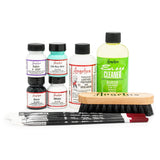
To safely remove mold from leather, you need a combination of protective equipment, mold-removal tools, compatible cleaning products, controlled application materials, drying equipment, and post-cleaning leather care supplies. The exact requirements depend on the leather type, surface finish, and manufacturer care instructions. Finished leather, aniline leather, suede, nubuck, and unfinished leather can react differently to cleaning solutions, so each product should be selected based on material compatibility rather than used universally.
Preparation Checklist:
-
Personal Protection: Nitrile or rubber gloves, an N95 respirator mask (to block airborne spores), and eye protection.
-
Loose-Mold Removal Tools: Soft-bristled brush (horsehair preferred) or dry microfiber cloths to clear surface growth outdoors.
-
Cleaning Solution: A liquid agent compatible with your leather finish (see Selection Framework below).
-
Application Cloths or Brushes: Lint-free microfiber towels or soft applicator pads for controlled cleaning without soaking.
-
Residue-Removal Materials: Clean, soft cloths lightly dampened with plain water to lift residual cleaner and spores.
-
Drying Setup: A warm, well-ventilated indoor space with good airflow away from direct sunlight and heat sources.
-
Post-Cleaning Leather Care: A high-quality leather conditioner or cream to restore essential fats lost during cleaning.
Product Selection Framework:
|
Leather Type |
Recommended Cleaning Solution |
Applicator / Tools |
Conditioning Requirement |
|
Finished / Aniline Leather |
pH-balanced leather cleaner, suitable saddle soap, or diluted isopropyl alcohol when compatible |
Microfiber cloth, soft sponge, or leather-safe brush |
Leather conditioner, cream, or balsam |
|
Suede & Nubuck |
Specialty suede cleaner, suede eraser, or dry-cleaning method. Avoid liquid saturation. |
Suede wire brush, nylon brush, or suede-specific tools |
Suede protector spray. Avoid standard leather creams. |
|
Unfinished / Raw Leather |
Mild leather soap or manufacturer-approved cleaner after patch testing |
Horsehair brush or microfiber cloth |
Light leather oil or suitable natural conditioner |
Does Vinegar Kill Mold on Leather?
Yes, vinegar can kill and clean surface mold on leather, but its effectiveness depends on the leather type, finish, and extent of mold growth. White vinegar may help affect surface-level mold, while opinions are mixed on whether it reaches deep-seated spores within leather fibers. Before applying vinegar, dilute it appropriately and test it on a hidden area because acidic solutions can cause discoloration, finish changes, or damage to some leather surfaces. Use vinegar only when it is compatible with the specific leather type, and consider leather-specific cleaners for safer treatment.
How Do You Clean Mold Off Different Leather Items?

To clean mold off different leather items, follow a material-specific approach based on the item’s structure, surface finish, and moisture tolerance. Each item, from jackets and car seats to couches and saddles, demands tailored care, controlled moisture, and safe conditioning to protect its unique finish, seams, and padding without compromising durability. Using a versatile, all-in-one leather cleaner helps streamline this process by gently lifting surface growth across various smooth leather goods without risking finish damage.
How Do You Clean Mold Off a Leather Jacket?
To clean mold off a leather jacket, remove loose mold outdoors, treat the affected areas with a compatible leather cleaner, wipe away residue, dry the jacket naturally, and restore the leather condition with suitable care products. Prompt treatment helps prevent mold from spreading through seams, lining areas, and surface sections while reducing the risk of finish damage.
Use the following steps to clean mold off a leather jacket:
-
Move the jacket to a ventilated area and remove loose mold using a soft brush or microfiber cloth while wearing protective gear.
-
Check the jacket’s care label and patch-test a leather-safe cleaning solution before treating visible mold.
-
Clean affected areas gently, including collars, cuffs, seams, and surface panels, without soaking the leather or lining.
-
Wipe away remaining residue, allow the jacket to dry naturally away from heat, and apply a compatible leather conditioner when suitable.
How Do You Clean Mold Off Leather Shoes?
To clean mold off leather shoes, remove laces and surface mold carefully, clean the leather with a compatible solution, control moisture during treatment, dry the shoes completely, and restore the leather condition afterward. Proper cleaning helps prevent mold from spreading into seams, affecting the shoe structure, or causing long-term leather damage.
Here’s how to remove mold from leather shoes:
-
Remove laces and loose mold outdoors using a soft brush or microfiber cloth while wearing protective equipment.
-
Select a leather-safe cleaning solution, patch test it, and apply it gently to affected areas without soaking the shoe.
-
Clean seams, welt areas, tongue sections, and leather surfaces carefully while maintaining the shoe shape during treatment.
-
Dry the shoes naturally with airflow, avoid direct heat, and apply a suitable leather conditioner after complete drying.
How Do You Clean Mold Off Leather Car Seats?
To clean mold off leather car seats, move the vehicle to a well-ventilated area, remove loose mold, and apply a tested leather-safe cleaner to the affected surfaces. Carefully clean seams and perforations, remove residue, dry the seats thoroughly with airflow, and condition the leather once completely dry. This process helps protect automotive leather from finish damage, excess moisture, and mold recurrence.
Remove mold from leather car seats with the following steps:
-
Move the vehicle to a well-ventilated area, remove loose mold while wearing protective equipment, and carefully clean the affected leather surfaces.
-
Apply a compatible leather cleaner after patch testing and treat seat panels, seams, and perforated areas without excess liquid.
-
Wipe away any residue, allow the seats to dry naturally with airflow, and apply a suitable leather conditioner after they are dry.
How Do You Remove Mold From a Leather Bag?
To remove mold from a leather bag, empty the compartments, remove loose mold carefully, clean affected leather areas with a compatible solution, dry the bag completely, and restore the leather condition after treatment. Proper cleaning helps protect the bag’s exterior surface, lining, seams, and hardware from moisture damage and recurring mold growth.
Clean mold from a leather bag with these steps:
-
Empty the bag, open compartments, and remove loose mold outdoors using a soft brush or microfiber cloth with protective equipment.
-
Select a leather-safe cleaner, patch-test the solution, and treat exterior panels, seams, straps, and affected areas without soaking the bag.
-
Check the lining and inner compartments for mold, then wipe away residue with a clean cloth after treatment.
-
Allow the bag to dry in an open, ventilated area, maintain its shape, and apply a suitable leather conditioner when recommended.
How Do You Clean Mold Off a Leather Saddle?
To clean mold off a leather saddle, remove loose mold from all saddle areas, treat affected leather with a compatible cleaner, control moisture around stitched sections, dry the saddle completely, and restore the leather condition after cleaning. Proper treatment helps protect the saddle structure, stitching, folds, and leather panels from mold damage while maintaining flexibility and usability.
Use the following steps to clean mold off a leather saddle:
-
Move the saddle to a ventilated area, wear protective equipment, and remove loose mold from the surface, underside, folds, and stitching using a soft brush.
-
Select a leather-safe cleaning solution, patch test it, and apply it carefully to affected leather areas without oversaturating the material.
-
Clean panels, straps, seams, and hidden areas where mold may collect while protecting the saddle structure from excess moisture.
-
Remove residue with a clean cloth, allow the saddle to dry naturally away from heat, and apply a suitable leather conditioner after it is completely dry.
How Do You Clean Mold Off a Leather Coat?
To clean mold off a leather coat, inspect the affected areas, remove loose mold carefully, clean the leather with a compatible solution, dry the coat properly, and restore the surface condition after treatment. Leather coats require controlled cleaning because moisture can affect the outer leather, seams, lining, and overall shape.
Here’s how to remove mold from a leather coat:
-
Check the collar, cuffs, seams, pockets, and lining areas for visible mold, odor, stains, or moisture-related damage.
-
Remove loose mold from the leather surface using a soft brush or microfiber cloth in a ventilated area while wearing protective equipment.
-
Treat affected leather sections with a suitable leather-safe cleaning solution after completing a hidden patch test.
-
Wipe away any residue, allow the coat to dry naturally in a well-ventilated area away from heat, and condition the leather when appropriate.
How Do You Clean Mold Off a Leather Couch?
To clean mold off a leather couch, start by identifying where mold has developed across the upholstery surface, seams, and hidden areas. Leather couches require careful moisture control because liquid can move into cushions, padding, and stitched seams. A controlled cleaning approach helps remove surface mold while protecting the couch structure and leather finish.
Follow these steps to clean mold off a leather couch:
-
Inspect cushions, seams, creases, armrests, and areas near walls or damp spaces to locate visible mold and moisture sources.
-
Vacuum or brush away loose mold particles from the couch surface while wearing protective equipment, and avoid spreading debris into the surrounding room.
-
Apply a tested, leather-safe cleaning solution to affected areas with a soft cloth, working in small sections without soaking the upholstery or padding.
-
Remove cleaner residue, keep cushions separated for airflow, allow the couch to dry completely, and restore the leather surface with suitable care products when recommended.
How Do You Clean Mold Off Leather Gloves?
To clean mold off leather gloves, inspect the affected areas, remove loose mold carefully, treat the leather with a tested cleaning solution, and dry the gloves properly while maintaining their shape. This process helps protect the glove’s flexibility, stitching, lining, and surface condition without exposing the leather to excessive moisture.
Use these steps to clean mold from leather gloves:
-
Examine the gloves for mold on fingers, cuffs, seams, and inner lining before starting the cleaning process.
-
Brush away loose mold particles in a well-ventilated area using a soft brush or microfiber cloth, and wear protective equipment.
-
Apply a tested, leather-safe cleaner to affected areas using controlled moisture, and avoid soaking the gloves.
-
Remove residue, dry the gloves naturally while maintaining their original shape, and condition the leather when suitable.
What Are the Common Types of Mold on Leather?
Common types of mold include light, powder-like mildew, green or yellow fungal patches, dark mold staining, and leather bloom. These appearances range from surface growth and colored patches to lingering discoloration. Leather bloom can resemble mold but may result from natural oils, waxes, or changes in the leather finish.
Below are the 4 common types of mold on leather:
-
Light, Powder-Like Mildew: Appears as a pale, dusty coating on the leather surface and commonly develops when moisture remains trapped on the material.
-
Green or Yellow Fungal Patches: Develop as irregular coloured growth on leather when damp conditions and limited airflow allow mold activity to continue.
-
Dark Mold Staining: Leaves noticeable discoloration on leather surfaces and may remain even after the active mold growth has been removed.
-
Leather Bloom: Forms as a white, waxy, or cloudy surface deposit that can resemble mold but may result from natural oils, waxes, or leather finish changes.
How Do You Clean Mildew Off Leather?
To clean mildew off leather, remove loose powdery growth, apply a compatible mildew cleaner, remove remaining solution and moisture, allow the leather to dry naturally, and inspect the surface before restoring its condition. Mildew usually affects the outer leather surface, but careful treatment is required to prevent spores from spreading, avoid excess moisture, and protect the leather finish.
Follow these steps to clean mildew off leather:
-
Step 1: Remove loose mildew outdoors
Take the leather item to a ventilated area before disturbing the affected surface. Wear an N95 mask and gloves, then use a dry microfiber cloth or soft horsehair brush to remove loose white or gray powdery growth with gentle sweeping motions. Avoid heavy pressure because it can push spores into seams, stitching, or leather grain.
-
Step 2: Apply a compatible mildew cleaner
Dampen a soft cloth with a pH-balanced commercial leather cleaner, saddle soap, or a mild solution of equal parts white vinegar and water. Gently wipe the surface in controlled circular motions. Mildew releases quickly, so avoid heavy wetting and keep the cloth barely damp to prevent moisture from seeping into linings or interior padding. Prevent powdery spores from settling inside your home.
-
Step 3: Remove cleaning residue and moisture
Use a separate cloth lightly dampened with clear water to wipe down the treated section and remove cleaner residue. Immediately follow with a dry microfiber towel to absorb any lingering surface moisture, paying extra attention to stitching, folds, and zippers, where dampness tends to linger. Prevent powdery spores from settling inside your home.
-
Step 4: Allow natural air-drying
Place the leather item in a dry space with consistent airflow and allow it to dry completely under normal conditions. Avoid direct sunlight, radiators, hair dryers, and heated air, as concentrated heat can cause leather to shrink, crack, fade, or stiffen.
-
Step 5: Inspect and condition the leather
Once fully dry, examine the leather for remaining discoloration or musty odors. If the musty smell persists, the fungal growth may have reached the inner lining. If the surface is clean and odorless, apply a small amount of leather conditioner to restore flexibility and moisture lost during cleaning. Prevent powdery spores from settling inside your home.
How Do You Get Mold Smell Out of Leather?
To remove mold smell from leather, clean and dry the item completely before addressing the remaining odor. Persistent smells often indicate trapped moisture, mold residue, or contamination inside seams, linings, or storage areas. Use odor absorbers and ensure proper ventilation to reduce odor without introducing additional moisture or damaging the leather surface.
Follow these steps to remove mold smell from leather:
-
Ensure all active mold growth has been thoroughly removed and the leather is completely dry before attempting odor treatment.
-
Place the leather item inside a sealed box or bag alongside an open container of activated charcoal, baking soda, or a commercial leather-safe deodorizer, ensuring the absorber does not directly touch the leather.
-
Keep the box or bag sealed for 24 to 48 hours to allow the absorber to draw out trapped musty smells.
-
Remove the item from the container and allow it to air out in a well-ventilated room.
-
Apply a high-quality leather conditioner to restore essential moisture and protect the finish.
How Do You Restore Leather After Removing Mold?

To restore leather after removing mold, confirm that the surface is completely clean and dry before applying any conditioning product. Proper restoration helps replenish moisture, maintain flexibility, and protect the leather finish after cleaning. Use a compatible conditioner and apply it carefully to avoid oversaturation, uneven darkening, or changes to the original appearance.
Follow these steps to restore leather after mold removal:
-
Verify complete dryness and cleanliness to ensure no residual moisture, mold residue, or active growth remains trapped in the leather.
-
Select a compatible leather conditioner that matches the specific leather finish and restoration requirements.
-
Apply the conditioner in light, controlled layers to prevent oversaturation, uneven absorption, or dark spots on the surface.
-
Allow the conditioner to absorb fully into the leather grain, then gently buff the surface to remove excess product and restore a smooth, flexible finish.
Why Does Mold Grow on Leather?
Mold grows on leather when moisture, humidity, limited airflow, and poor storage conditions create an environment that supports fungal growth. Leather absorbs surrounding moisture, and items stored in damp areas, closed containers, or poorly ventilated spaces can develop surface mold over time. Condensation, wet contact, and contaminated storage areas can increase the risk of mold growth. Maintaining dry conditions, proper airflow, and suitable storage practices helps reduce moisture buildup and prevents mold from returning.
Is Mold on Leather Dangerous?
Yes, mold on leather can be dangerous because it may cause stains, surface deterioration, unpleasant odors, and damage to the leather finish if left untreated. Handling moldy leather can also release spores into the surrounding environment, especially during brushing or cleaning. The level of concern depends on the amount of growth, exposure conditions, and the affected area. Removing mold early, using protective equipment, and maintaining dry storage conditions help protect both the leather item and the surrounding space.
How Often Should Leather Be Checked for Mold?
Check leather items for mold once a month under normal storage conditions, or inspect them every two weeks when stored in damp, warm, or humid environments. Mold can begin developing on leather within 24 to 48 hours when moisture remains trapped and airflow is limited. Regular inspections help identify early signs of mold growth before it spreads across surfaces, seams, folds, or hidden areas.
Increase inspection frequency for leather items stored in basements, closed containers, seasonal storage spaces, or poorly ventilated areas. Check seams, linings, undersides, and nearby storage surfaces regularly to detect moisture problems and maintain dry conditions that reduce mold recurrence.
How Do You Prevent Mold From Growing on Leather Again?
To prevent mold from growing on leather again, control moisture, maintain airflow, store leather items properly, and inspect them regularly for early signs of growth. Mold commonly returns when leather remains damp, is stored in enclosed spaces, or is exposed to high humidity. Keeping leather clean, dry, and properly conditioned helps protect the surface and reduces the conditions that allow mold to develop.
Follow these steps to prevent mold from returning on leather:
-
Store leather items in a dry, ventilated area and avoid sealed plastic bags that trap moisture around the material.
-
Maintain stable humidity levels, ideally below 50%, and use airflow or dehumidification in damp storage spaces.
-
Keep leather items completely dry before storage and avoid placing them near wet surfaces or poorly ventilated areas.
-
Inspect seams, folds, linings, and storage containers regularly to identify moisture buildup or early mold growth before it spreads.