A comic book design turns a plain leather wallet into something you'll actually want to show off. Bold outlines, bright colors, a favorite character or a burst of "POW!" lettering all translate well to leather, as long as you prep the surface and use paint made to flex. This guide covers the whole process, from stripping the factory finish to sealing the finished art.
Understanding Leather Painting
How Painting Leather Differs From Canvas or Paper
Leather has texture and natural oils, and those oils push paint away if you don't prep the surface first. It also bends every time you open the wallet, so ordinary paint cracks.
Why You Need Leather-Specific Paint and Tools
Use acrylic leather paint. It's made to stay flexible, grip leather, and resist cracking. Pair it with a leather preparer and good fine-tipped brushes.
Essential Materials
Prep
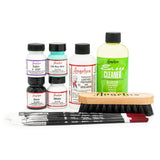
Leather Preparer & Deglazer to remove the factory finish and oils
Fine-grit sandpaper to lightly scuff the surface
Lint-free cloths
Painting
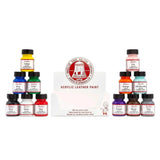
Acrylic leather paints in bold comic colors
Brushes: fine tips for detail, wider ones for fills
Painter's tape for clean edges
A palette for mixing custom colors
Finishing
Acrylic Finisher or another leather sealant
Gloves, so oils from your hands don't get on the leather
A drop cloth or newspaper

Preparing the Leather Wallet
Step 1: Clean the Surface
Wipe the wallet with a lint-free cloth dampened with leather cleaner or rubbing alcohol, then let it dry completely.
Step 2: Deglaze
Rub leather preparer and deglazer over the area you'll paint, working in small sections, to strip the factory coating so the paint can bond.
Step 3: Mask Off What You Won't Paint
Cover zippers, edges, and logos with painter's tape. Press it down firmly so you get sharp lines.
Design Planning
Step 1: Pick Your Design
Characters, bold lettering, and action scenes all work. Keep the wallet's size in mind; a simple, punchy design reads better on a small surface than a crowded panel.
Step 2: Sketch and Transfer
Draw the design on paper first, using a template if you want. Then lightly transfer the outline to the wallet with a pencil or stylus. Don't press hard, or you'll leave dents in the leather.
Painting Techniques
Step 1: Lay Down Base Colors
Use a wider brush to apply base colors in thin, even coats, letting each one dry before the next. Building up gradually prevents cracking and lumpy texture.
Step 2: Add Details, Shadows, and Highlights
Switch to fine brushes for faces, costume lines, and speech bubbles. Add shadows and highlights with slightly darker and lighter versions of your colors to give the design depth.
Step 3: Keep Colors Bright
Blend neighboring colors carefully where you want smooth transitions, and don't overload the brush, which muddies colors.
Drying and Sealing
Step 1: Let It Dry
Leave the wallet somewhere dust-free for at least 24 hours.
Step 2: Seal It
Apply a leather sealant in thin, even coats with a clean sponge or brush, letting each coat dry according to the product directions before adding another.
Maintenance and Care
Wipe off dirt with a damp cloth and skip harsh chemicals. Store the wallet somewhere cool and dry, out of direct sun, to prevent fading. Reapply sealant now and then to keep the art protected.
Troubleshooting Common Issues
Paint Cracking
This usually means the coats were too thick or didn't dry long enough. Use thinner layers and give each one more time.
Color Bleeding
Too much paint on the brush or tape that wasn't pressed down well. Use less paint and mask carefully.
Uneven Application
Usually uneven prep or inconsistent strokes. Sand the leather evenly and paint with steady, even strokes.

(Source: @unique__streets)
Angelus Direct carries the paints, preparers, and finishers used in this guide.
FAQs
1. Can regular acrylic paint be used on leather wallets?
No. Regular acrylic isn't flexible enough and will crack. Use leather-specific acrylic paint.
2. How do I prevent paint from cracking over time?
Apply thin layers, let each coat dry completely, and seal the finished design with a leather sealant.
3. What's the best way to clean a painted leather wallet?
Wipe it gently with a damp cloth. Don't soak it or use harsh chemicals.
4. Can comic designs be painted on textured leather?
Yes, but fine details are harder on texture, so prep thoroughly and take your time on the linework.
5. How do I ensure vibrant colors in my artwork?
Use quality leather paint like Angelus and build color in thin, even layers. A sealant helps keep colors bright over time.