The short answer
Yes, you can dye suede shoes. Brush off the dirt, test the color on a hidden spot, tape off the soles and any smooth leather, then work Angelus Suede Dye into the nap in thin, even coats. Let each coat dry, add more until the color is even, and brush the nap up once it's dry. Suede dye goes darker or deepens a color. It can't make suede lighter.
Suede has no finish on top, so dye soaks into the fibers instead of sitting on the surface. That's why suede dye keeps the nap soft, and why paint isn't the answer: paint coats the fibers and leaves suede flat and stiff. The color you end up with depends on what's underneath. Red dye on white suede turns pink, and black covers most colors.
We've made dye in Los Angeles since 1907. This guide covers restoring faded suede, changing the color completely, and fixing the problems customers run into most, like a purple sheen on black or dye that rubs off. It works the same on nubuck.
Before you start: what to expect
Dye only goes darker. You can deepen a faded color or go from tan to brown, navy, or black. Going from dark to light isn't possible with dye.
Black and navy can show a purple or bronze sheen when too much dye sits on the surface. It's fixable, and step 6 shows how.
Buy enough for the job. Customers often finish a pair of sneakers or ankle boots with one 3 oz. bottle. Tall boots, light colors over darker suede, and jackets take a lot more, so a pint is safer for big pieces.
Quick answer: how to dye suede shoes
- Prep: brush and erase dirt, and let the suede dry.
- Test: dab the dye on a hidden spot and let it dry.
- Tape: cover soles, stitching you want to keep, and smooth leather.
- Dye: thin, even coats with a dauber or brush, drying between coats.
- Finish: wipe off excess, brush the nap up, and spray with Water & Stain Repellent.


How to dye suede shoes, step by step
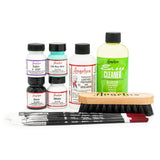
You'll need Angelus Suede Dye in your color, the Angelus Nubuck & Suede Kit (an eraser and a nylon brush), wool daubers or a soft paint brush, masking tape, gloves, and paper to stuff the shoes. Suede dye is flammable, so work away from heat and open flame with a window open.
Brush, erase, and dry the suede
Brush the dry shoe in one direction to loosen dirt, rub out marks with the suede eraser, then brush again to lift the nap. Dye can't get through dirt or flattened fibers, and a stain you leave behind can show through the new color. For heavier dirt, clean the suede with Easy Cleaner and let it dry completely before you dye. Stuff the shoes with paper so the suede is stretched smooth.

What you'll need first
Angelus Nubuck & Suede Kit
A suede eraser and nylon brush that lift scuffs and dirt and raise the nap.
ShopTest the color on a hidden spot
Dab a little dye on the inside of the tongue or the inner heel and let it dry. Suede dye mixes with the color already in the suede, so the result can look different from the bottle. Dark grey can dry lighter than expected, and tan can lean orange on some suede. If the shade is off, mix colors: customers have blended Black with Navy for midnight blue and added Dark Red to Pink for a deeper pink. To make any color lighter or more subtle, thin it with Neutral Suede Dye.
Tape off the soles, stitching, and smooth leather
Suede dye spreads into anything absorbent it touches, including white stitching and smooth leather panels. Run masking tape along the midsole and over any leather you want to keep. If dye lands on rubber or a smooth surface, wipe it off right away with a little rubbing alcohol.

Apply a thin, even first coat
Shake the bottle well, and shake it again as you work. Load the dauber lightly, press out the excess on the bottle's edge, and work the dye into the suede with even strokes, one panel at a time. Keep a wet edge so you don't get lap marks where dried and wet dye overlap. For edges, eyelets, and seams, a fine paint brush gives more control than the dauber. Too much dye at once is what causes blotches, a sheen on dark colors, and dye that rubs off later.
Let it dry, then add coats
Let each coat dry before judging the color, since wet suede looks darker. Most restorations take 2 to 3 coats. A color change over a darker or very different shade can take 4 or more. Customers who dyed tan moccasins pink and beige booties lilac needed several coats and more than one bottle.
Wipe off excess and brush the nap up
Once the last coat is fully dry, brush the whole shoe with a stiff suede brush to break up the fibers and bring back the soft feel. One customer found a toothbrush wasn't enough to resoften the suede, so use a real suede or boot brush. If black or navy shows a purple or bronze sheen, the surface is oversaturated. With gloves on, wipe it lightly with a soft cloth dampened with Angelus Deglazer or rubbing alcohol, a few passes, to lift the extra dye. Once it's dry, add color only where needed with a synthetic brush.
Protect it with Water & Stain Repellent
Spray 2 to 3 light coats of Angelus Water & Stain Repellent, about 30 minutes apart, and let the shoes dry at least 12 hours before wearing. It repels water and stains and helps keep dyed suede from bleeding onto socks and pants. Keep the coats light, since heavy spraying can darken some colors for a while.
Restoring faded suede vs. changing the color
If the suede is the right color but faded or stiff, start with Angelus Suede Renew. It restores color and softens nap that's gone rigid, with no full dye job. For a real color change, or fading Suede Renew can't bring back, use suede dye in the original color or a shade darker.
Dyeing different suede items
Sneakers
Tape carefully where suede meets leather, mesh, or the midsole, since sneakers have more edges than boots. Customers restore faded Jordan 4 and 5 suede this way, often in one or two coats when the color matches.
Boots
Boots cover more area than you'd think. One customer found 3 oz. barely covered one knee-high boot, so buy a pint for tall boots. Work one side at a time so you can keep a wet edge.
Sandals and slippers
Customers have redone suede Birkenstock straps and UGG slippers. Cover cork footbeds and sheepskin linings before you start so dye doesn't get on them.
Nubuck
Nubuck takes suede dye the same way, with the same prep. Our guide to nubuck vs. suede explains the difference.
Faux suede
Many faux suedes take suede dye, but synthetic fibers vary a lot, so always test a hidden spot first.
Troubleshooting suede dye
Black came out purple or bronze
That's extra dye sitting on the surface. Wipe gently with Deglazer or rubbing alcohol on a soft cloth, let it dry, and brush. Then add thin coats with a synthetic brush only where the color is light.
The dye rubs off on hands or clothes
Excess pigment is sitting on the nap. Brush it out thoroughly once it's dry, wipe with a dry cloth, and seal with Water & Stain Repellent.
The color is blotchy or streaky
Uneven loading usually causes it. Add another thin coat over the whole panel and keep a wet edge. On large pieces like jackets, customers have had better luck with a soft brush than with cotton swabs.
The color isn't what you expected
Remember that the base color mixes in. Go darker with the same color, shift it by mixing in another dye, or lighten your next batch with Neutral. Dye can't lift a color that's already too dark.
Suede dye or something else?
| If you want to | What we'd use |
|---|---|
| Restore faded suede in the same color | Suede Renew, or suede dye in the original color |
| Change suede to a darker color | Angelus Suede Dye |
| Make suede lighter | Not possible with dye. Paint would cover it but leaves the suede stiff. |
| Just clean dirty suede | The Nubuck & Suede Kit. See how to clean suede shoes. |
| Dye smooth leather | Angelus Leather Dye. See how to dye leather boots and shoes. |
| Add artwork or a design to suede | Suede dye with a fine brush. Paint sits on top and stiffens the nap. |
Mistakes to avoid
- Skipping the test spot. The base color changes the result, so a color that looks right in the bottle can dry pink, orange, or purple on your shoe.
- Flooding the suede. Heavy coats cause blotches, sheen, and rub-off. Build color slowly.
- Leaving stitching and leather untaped. Suede dye spreads into anything absorbent.
- Not shaking the bottle. The pigment settles, and the color shifts as you go.
- Skipping the brush. Dried dye leaves the nap stiff until you brush it back up.
- Buying one small bottle for tall boots or a jacket. Running out mid-job leaves a line where the color changes.
Suede dye FAQ
Can you dye suede shoes?
Yes. Suede dye soaks into the fibers and keeps the nap soft. Brush the shoes clean, test on a hidden spot, and apply thin coats until the color is even.
Can you paint suede shoes?
You can, but paint coats the fibers and leaves suede flat and stiff. For suede, we'd use suede dye.
Can you dye suede a lighter color?
No. Dye only goes darker. Neutral Suede Dye thins a color so your result is lighter than the full-strength dye, but it can't lighten suede that's already dark.
Why did my black suede dye turn purple?
Usually too much dye is sitting on the surface. Wipe gently with Deglazer or rubbing alcohol on a soft cloth, let it dry, brush, and touch up with thin coats.
How many coats of suede dye do I need?
Usually 2 to 3 for a restoration. A big color change or a light color over darker suede can take 4 or more.
How much suede dye do I need?
One 3 oz. bottle often covers a pair of sneakers or ankle boots. Tall boots, jackets, and light-over-dark color changes can take a pint or more.
Does suede dye rub off?
Excess dye can. Brush and wipe off extra pigment once it's dry, then seal with Water & Stain Repellent to help keep it from bleeding.
Can you dye nubuck?
Yes, Angelus Suede Dye works on nubuck the same way.
Can suede dye be mixed?
Yes. Angelus suede dyes mix together for custom shades, and Neutral thins any color.
Related guides: Clean suede shoes · Nubuck vs. suede · Dye leather boots and shoes · Paint leather shoes